
What is Montessori Education?
What Is Montessori Education? 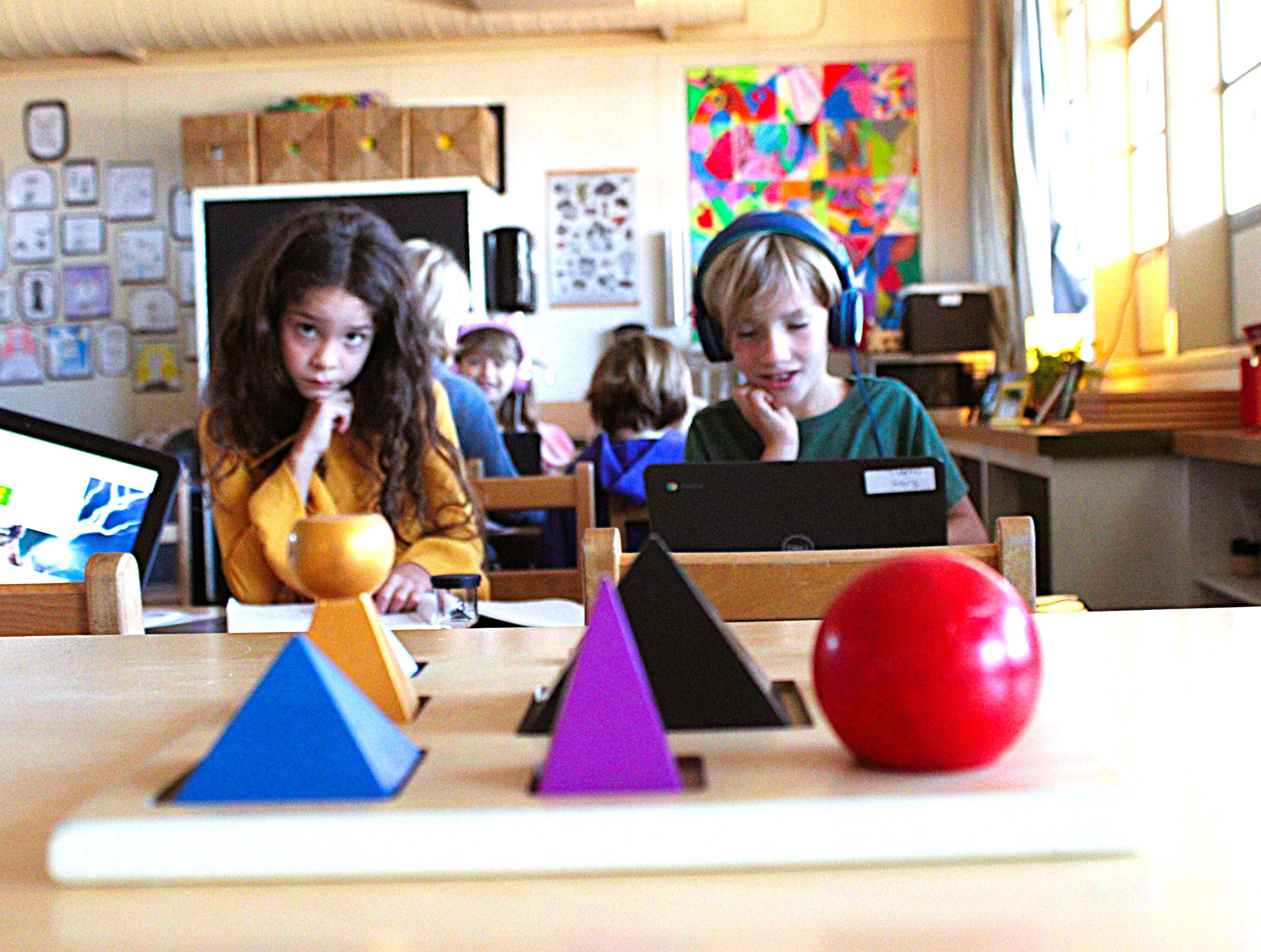
Montessori education is a child-centered approach to learning that supports the natural development of children from early childhood through adolescence. Founded by Dr. Maria Montessori in the early 1900s, the method emphasises independence, hands-on learning, and respect for the individual child. Montessori environments are carefully prepared so that children can explore, discover, and learn at their own pace, guided by trained Montessori educators.
Rather than relying on lectures, worksheets, or a one-size-fits-all curriculum, Montessori classrooms give children the freedom to choose meaningful work while receiving individualized lessons. This creates confident, capable, and intrinsically motivated learners who take ownership of their education.
The Montessori Philosophy
Respect for the Child
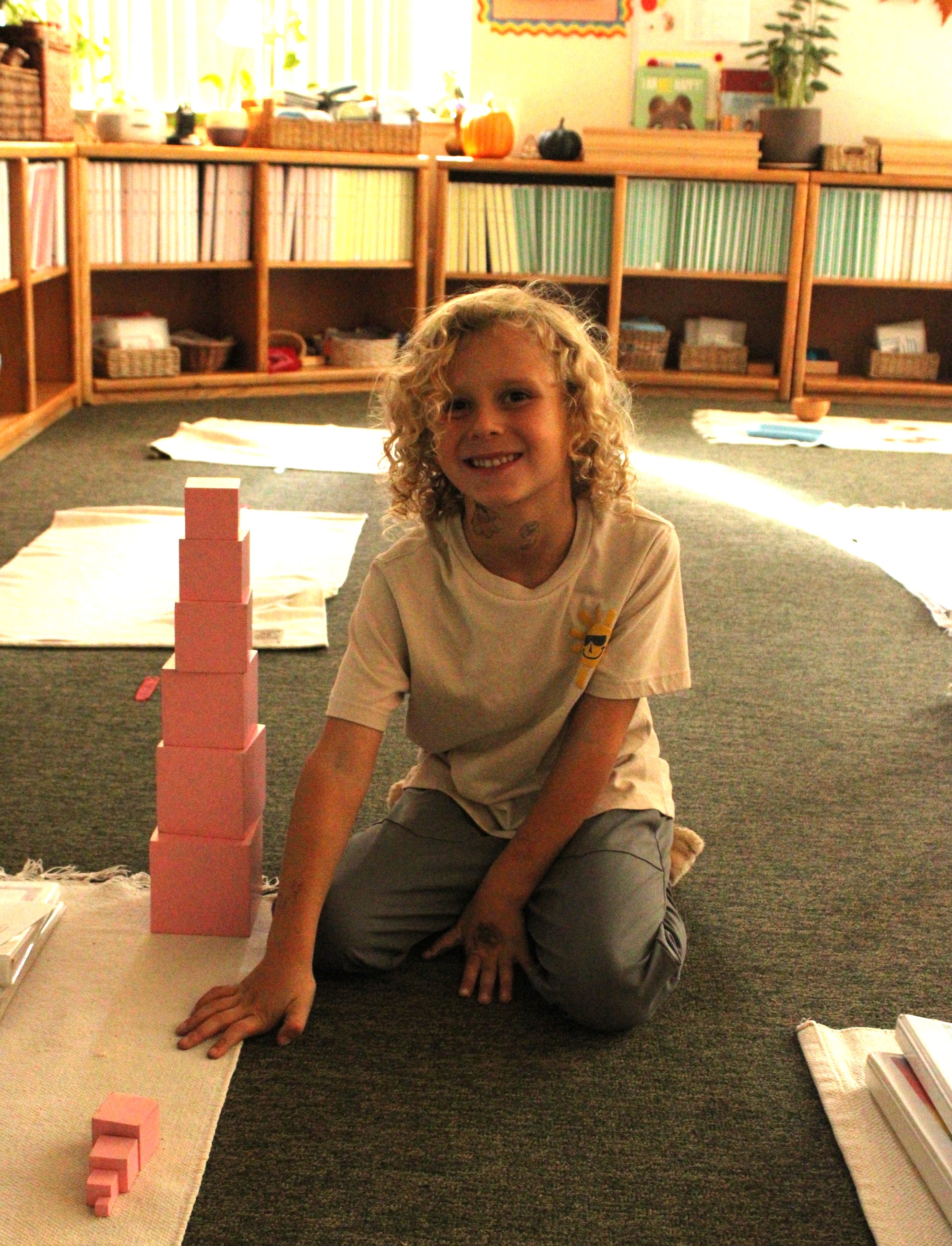
Montessori education is built on the belief that every child is naturally curious, capable, and deserving of deep respect. Teachers observe rather than direct, allowing children to follow their interests and develop self-discipline and independence.
Hands-On, Experiential Learning
Montessori materials are scientifically designed to be tactile, beautiful, and self-correcting. Children learn abstract concepts through concrete experiences, building a strong foundation for higher-level thinking and real-world applications.
Independence and Freedom Within Limits
Children are trusted with choice. In a Montessori environment, they select work that interests them, move around the classroom freely, and take responsibility for their materials. Clear community expectations and gentle guidance help children learn to make responsible choices.
The Prepared Environment
Every Montessori classroom is thoughtfully arranged to meet the developmental needs of its students. Materials are organized on open shelves, furniture is child-sized, and the classroom is calm, orderly, and aesthetically pleasing. This environment empowers children to care for themselves, each other, and their surroundings.
Mixed-Age Classrooms
Children learn best in a community. Montessori classrooms include multi-age groupings (e.g., ages 3–6, 6–9, 9–12) that mirror real-life social structures. Younger children learn from older peers, while older children reinforce their understanding through mentorship.
Intrinsic Motivation and a Love of Learning
Instead of rewards and punishments, Montessori nurtures curiosity and inner motivation. Children experience the joy of discovery, take pride in meaningful work, and develop a lifelong love of learning.
Why Montessori?
Families choose Montessori because it offers: 
-
Individualized learning tailored to each child’s pace and interests
-
Strong academic foundations built through active engagement
-
Social-emotional development rooted in respect, empathy, and community
-
Real-world skills like collaboration, problem-solving, and independence
-
A whole-child approach that nurtures the mind, body, and spirit
Montessori Resources:
Benefits of a Montessori Education Inside a Montessori Classroom
Montessori Core Components Current Montessori Research Montessori at Home
Montessori Spiral Curriculum
Montessori Curriculum Components
Montessori curriculum areas are interconnected, comprehensive, and intentionally sequenced to support the development of the whole child—academically, socially, emotionally, and physically. While the exact presentation varies by program level, all Montessori environments include the following core areas:
Practical Life
Practical Life activities help children develop independence, coordination, concentration, and a sense of responsibility. These real-world tasks—pouring, cleaning, food preparation, care of the environment, and grace and courtesy—build foundational life skills and promote confidence.
Sensorial Education
Sensorial materials refine the child’s senses and support cognitive development. Children classify, compare, and explore qualities such as size, shape, texture, sound, color, and temperature. These experiences prepare the mind for mathematics, language, and scientific thinking.
Language
The Montessori language curriculum builds communication skills through spoken language, writing, reading, grammar, and word study. Children progress from concrete materials (such as sandpaper letters and movable alphabets) to increasingly abstract work (sentence analysis, research writing, and literature studies).
Mathematics
Montessori mathematics materials make numerical concepts concrete and intuitive. Children explore concepts such as quantity, place value, operations, geometry, fractions, and algebraic thinking through the use of manipulatives. Over time, these hands-on experiences lead to a deep understanding and confidence with abstract math.
Cultural Studies
Cultural Studies is the heart of Montessori’s integrated curriculum, encompassing geography, history, Earth science, biology, anthropology, and world cultures. Children gain a global perspective, learn how humans meet their fundamental needs, and develop respect for the diversity of life and people.
Science
Hands-on experiments and exploration introduce children to botany, zoology, chemistry, physics, and ecology. Montessori science encourages observation, inquiry, and discovery—nurturing children’s natural curiosity about the world.
Art & Music
Creative expression is woven throughout the Montessori experience. Children experiment with different media, study artists and musical concepts, and experience music through singing, rhythm, movement, and instrument exploration.
Social–Emotional Development
Social development is cultivated through collaboration, mixed-age community, and “grace and courtesy” lessons that help children navigate relationships with kindness and empathy. Peace education fosters conflict resolution, emotional awareness, and global citizenship.
Montessori Cosmic Education
The Great Lessons spark wonder and introduce the cosmic curriculum, showing children how all things are interconnected in the story of the universe.
Science of Reading in the Montessori Classroom
Montessori's hands-on literacy work aligns with the science of reading by grounding learning in phonics, movement, and purposeful exploration.
High Quality Math Instruction
Montessori's concrete-to-abstract math builds deep reasoning, aligning with HQMI by fostering mastery, precision, and meaningful problem-solving.